Netwrck
Fiction.
First Notice
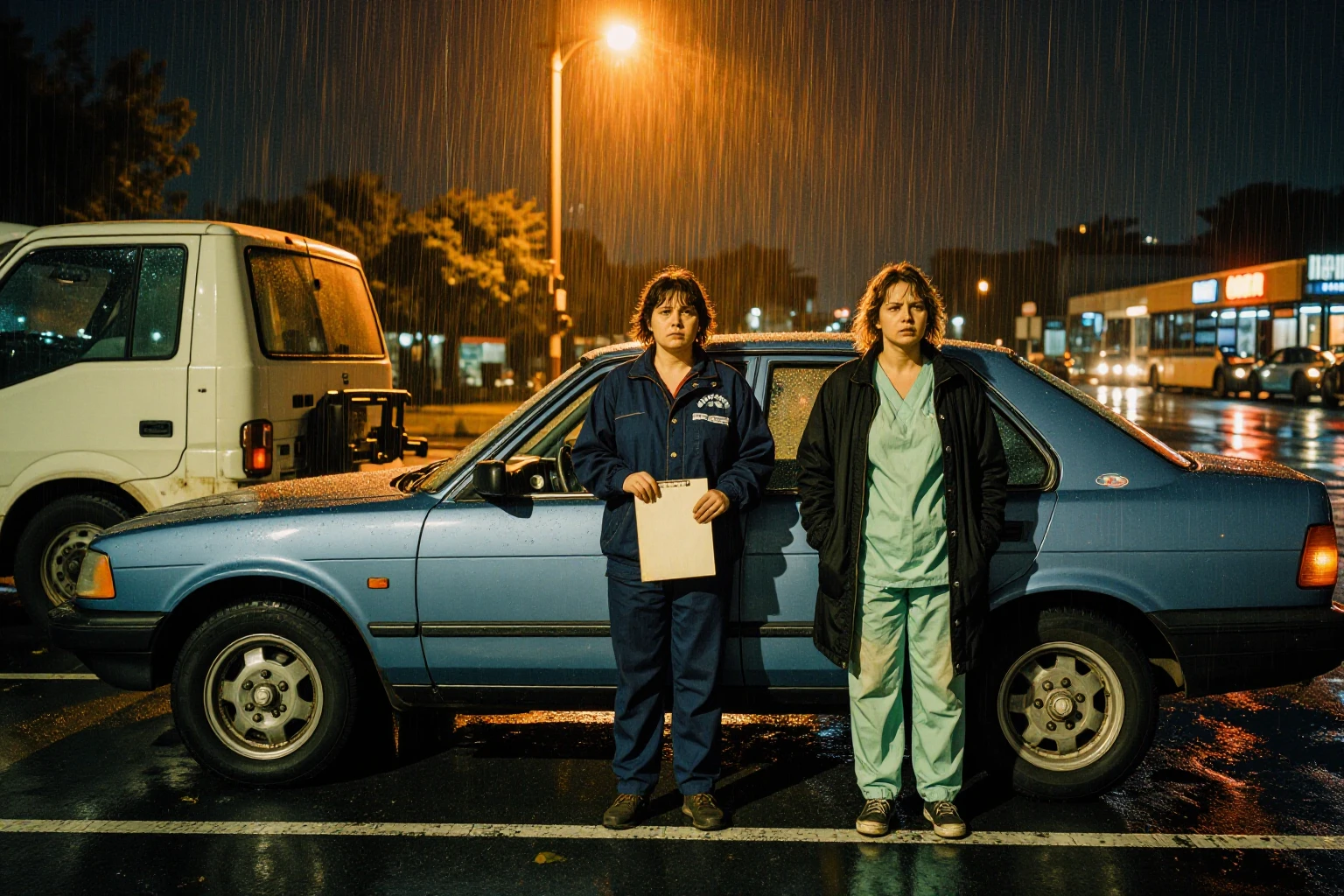
Lorna found the blue Ford at 2:47 in the morning outside the Willow Court Motor Inn. The motel sign had lost its willow years ago. COURT buzzed pink above a row of doors painted the color of old teeth.
She checked the plate twice.
Field recovery taught suspicion. People swapped plates, parked against walls, chained axles to drainpipes, and filled wheelie bins with concrete. This car offered no defense. It sat nose out beneath a streetlight with both front wheels straight. The finance company could have used it in a training photograph.
Lorna killed the tow truck lights and read the job again.
Registered borrower: Sasha Vale. Balance overdue: four months. Prior contact: two calls, three messages, one field notice. Employment: St Agnes Hospice, night orderly.
The surname had changed. The birth date had not.
Lorna sat with her hands on the wheel until the dispatch tablet dimmed. A freight train crossed the southern line. The carriages moved behind the motel one lit gap at a time.
At nineteen, Sasha had worn white men’s shirts from the charity shop and cut every label out because they made her neck itch. She kissed with her eyes open. Lorna had taken this as bravery. Years later she understood that Sasha liked to see exits.
Their last photograph together came from a booth at the railway arcade. Four frames for two dollars. In the final frame, Lorna was laughing at something outside the curtain while Sasha watched her.
Lorna printed a field notice and tucked it beneath the driver-side wiper. She marked the vehicle temporarily inaccessible, a phrase broad enough to hold a locked gate, an aggressive dog, or thirty years.
Dispatch called before she reached the bypass.
“Blue Ford?” Trevor asked.
“No safe lift position.”
“Photos show open parking.”
“Photos are old.”
“You took them six minutes ago.”
Lorna watched the motel disappear in the mirror. “Bins behind the axle.”
“Move the bins.”
“I am at the bypass.”
Trevor sighed into his headset. He was twenty-three and managed six drivers from a room above a vape shop. “You get one revisit. After that it goes to Madsen.”
Second Notice
She returned two nights later in her own car.
Sasha opened door nine wearing pale green scrubs and a black coat. Her hair, once black, had gone iron grey at the temples. She held Lorna’s notice folded into quarters.
“You have a face for the work,” Sasha said.
“What kind?”
“Patient until it costs money.”
“Four months costs money.”
“You came off shift to tell me that?”
“I am on shift.”
Sasha looked toward the unmarked hatchback. “Promotion.”
“My car.”
“Still grey.”
“They sell other colors.”
“You never trusted them.”
Rain clicked against the motel awning. A man in door eleven turned up a television. The canned applause pushed through the wall.
Lorna held out a payment plan form. “Call before five tomorrow. Offer half a month and a date for the rest. Say your employment is stable.”
“It is stable. People keep dying.”
“Do you have the money?”
“I have one hundred and twelve dollars until Thursday.”
“Then offer eighty.”
“The room is seventy a night.”
Lorna lowered the paper. “You live here?”
“For six weeks.”
“Where is the flat?”
“Converted to executive studios. Executives enjoy a cooker beside the bed.”
“Family?”
“My brother offered a sofa. His wife offered rules.”
“And the car?”
“Gets me to St Agnes at eleven and back here at eight. Some mornings I sit in it until housekeeping knocks.”
Lorna gave her the form. Their fingers touched, dry paper between them.
Sasha said, “You could have called.”
“You changed your number.”
“In 1999.”
“It worked.”
Sasha smiled once. The expression aged her and then took ten years away.
“Come inside,” she said.
Lorna looked through the open door. A single bed, one mug, green uniform trousers hanging from the shower rail. The room smelled of bleach and hot dust from the wall heater.
“I am working.”
“You said that.”
“Call them by five.”
“Goodnight, Lorna.”
“It is morning.”
“You always needed the last correction.”
Third Notice
The payment team rejected eighty dollars. Trevor sent the Ford to Madsen, then changed it back after Lorna offered to take two airport jobs nobody wanted.
“Midnight Friday,” he said. “Recovery or close. I am done reading your notes.”
“You should read more.”
“I read enough to know the car has no concrete wheelie bin.”
On Friday night the Ford was outside St Agnes. Staff vehicles filled the lower lot, their roofs shining under security lights. Lorna parked the tow truck beside the loading bay and walked the rows.
The Ford doors were unlocked.
Inside, the glove compartment hung open and empty. The back seat had been vacuumed. A hospital mint lay by the handbrake. Sasha had removed the phone cable, coins, sunglasses, and the small clutter people use to claim a machine as private space.
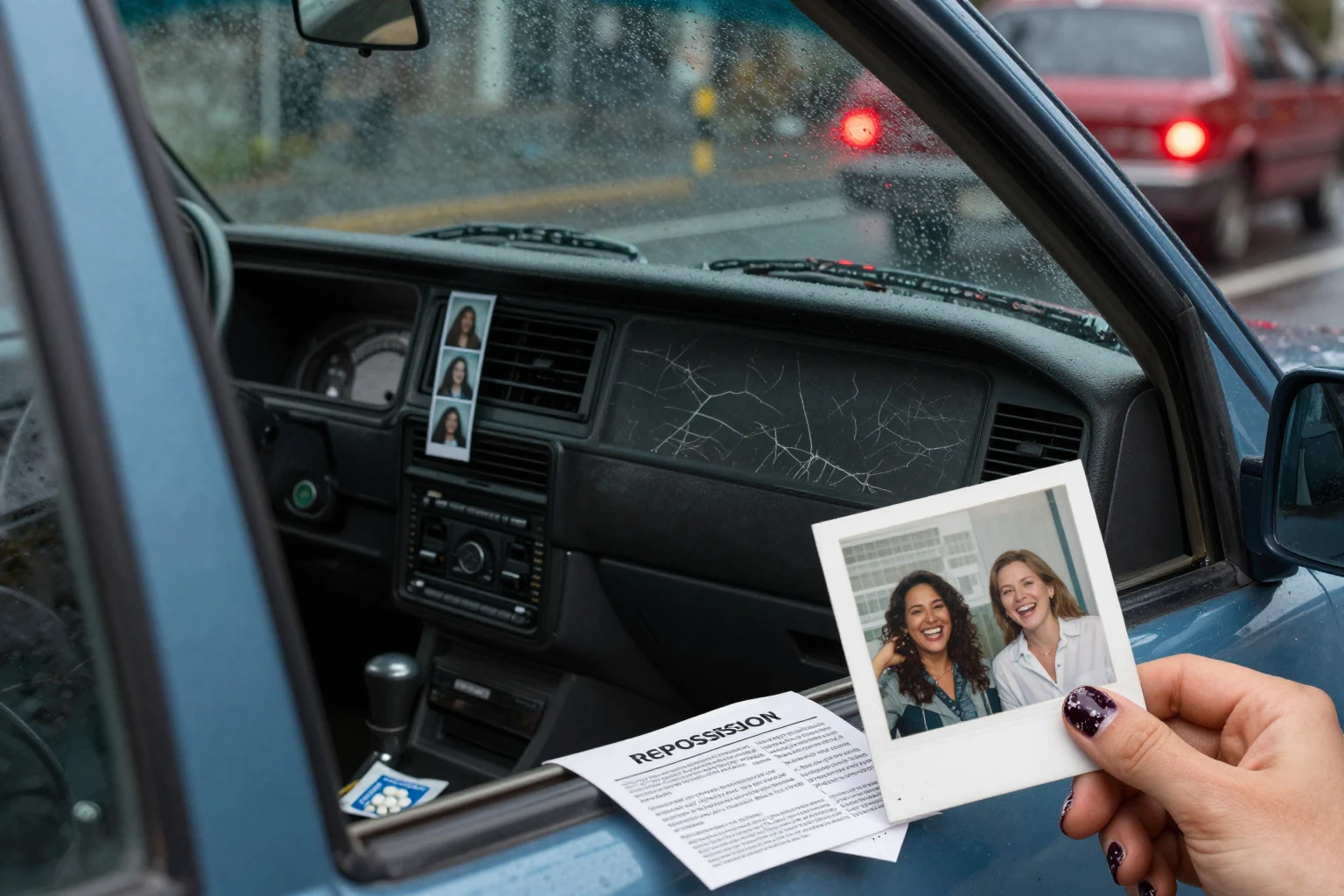
The booth strip was clipped to the center vent.
Lorna lifted it free. The photographs had faded toward blue. In frame one, Sasha looked suspicious. Frame two caught Lorna pulling her close. Frame three showed both women kissing badly, their noses pressed flat. In frame four, Lorna laughed beyond the curtain while Sasha watched.
A recovery notice lay on the passenger seat. Sasha had signed the voluntary surrender line and left the date blank.
Lorna began the lift. She lowered the wheel cradle, backed it beneath the Ford, and tightened the arms around the tires. Metal settled against metal. The task took four minutes.
When she raised the car, Sasha came through the hospice service door carrying a plastic bag.
“You are early,” she said.
“By whose clock?”
“Mine. Shift ends at seven.”
“You left the keys?”
“Cup holder.”
Lorna had missed them. That annoyed her.
“You cleaned it.”
“It needed cleaning.”
“You could have sold the tires.”
“You would have written something stern.”
Sasha held up the plastic bag. Inside were two packets of cheese sandwiches from the hospice kitchen.
“Breakfast?” she said.
Lorna looked at the Ford raised behind her. Once she accepted food, Sasha would sit in the cab. Once Sasha sat in the cab, they would speak about the motel, then the old arcade, then the twenty-seven years between them. Lorna could see the sequence and still felt no wish to stop it.
She unlocked the passenger door.
Recovery
They ate in the tow truck with the heater running. Sasha picked the crusts from her sandwich and arranged them on the wrapper. She had done the same at nineteen.
“Where will you go?” Lorna asked.
“Brother’s sofa. Rules included.”
“The car goes to auction Tuesday. You can collect personal property Monday.”
“I took everything.”
Lorna set the booth strip on the dashboard between them.
Sasha studied it. “That was in a box at my brother’s.”
“You left it in the car.”
“Yes.”
“Why?”
“You were coming.”
“Madsen might have come.”
“Then Madsen would know I had a good mouth once.”
Lorna laughed before she could charge herself for it.
At six thirty she dropped Sasha at the first bus stop on Bell Road. Company rules forbade passengers during a live recovery. They had already broken enough rules to make choosing one feel respectable.
Sasha stood beside the shelter with the plastic bag and watched the blue Ford ride away behind the truck. At the intersection, Lorna stopped for the red light. In the mirror, Sasha was still there.
The bus arrived and blocked the view.
Lorna placed the booth strip above the fuel gauge. Then she entered the recovery as complete and drove the car toward auction.