Netwrck
Fiction.
Morning, Mile 3
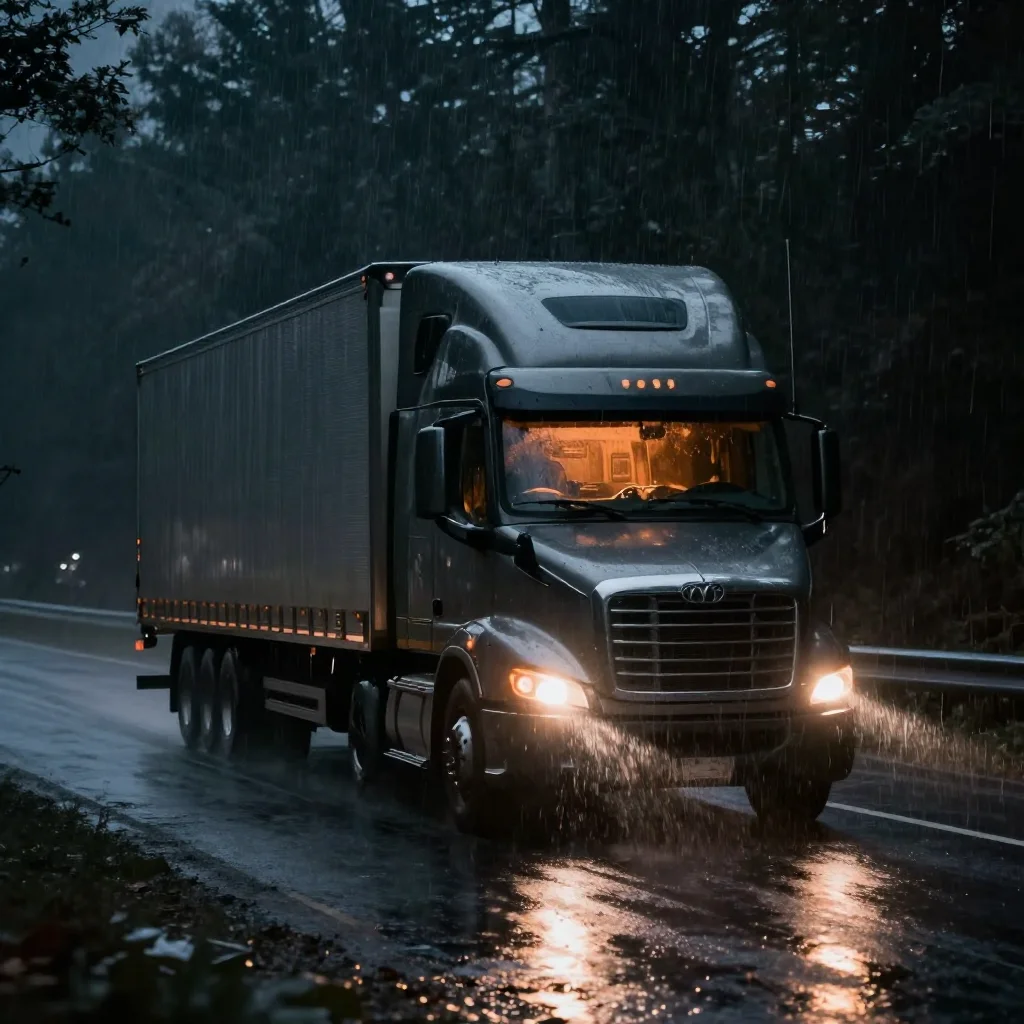
The truck began the day grey in the yard at four, and Dee Carson let it idle while she made a cup of tea from the thermos she had filled before dawn. Thirty-three years of mornings like this. The radio gave weather, then a man selling mattresses, then another man reading the news in a voice that could have read anything.
She had told the dispatcher the night before that this was her final run. He had said, "Everyone says that," and she had not corrected him, because she had said it once before, in 1994, and meant it, and then the next year the mortgage said otherwise.
Northbound 517 empty except for her suitcase and a box of her father's tools she had finally agreed to carry home. At the weigh station the officer looked at her licence, looked at her, and handed it back.
"Quitting?" he said.
"Finishing," she said.
He waved her through. The word followed her up the ramp.
The Suitcase
The girl was standing at the turnoff above the river with a suitcase that looked too heavy for her. She had one arm raised, not the full thumb-out gesture, more like she was holding up a wall. Dee had not picked up a hitchhiker in nine years, since the time a boy had tried to take the wheel on the bypass and she had put him out at the next service centre with his shoes in his hands.
She pulled over anyway.
The girl crossed the gravel with the suitcase dragging. She wore a thin coat over good clothes, the kind that came from a shop closed for lunch. Her nose was red but she was not crying.
"You going north?" Dee asked.
"As far as it goes."
"That is a long way. What is in the bag?"
"Everything I need."
"That is a small bag."
Dee watched her decide to smile. "It is everything I have," the girl said, and that was a different answer, and Dee opened the door.
Between the seats the girl arranged her coat twice. Dee waited for the usual questions: how long, how fast, are you allowed to carry people. The girl asked none. She asked, "Do you have children?" and Dee said, "One. Far away. It is fine," and the girl said, "Mine is in the bag," and Dee looked, and the suitcase was not that big.
Halfway
At the rest stop they ate sandwiches Dee had not planned to share. The girl said her name was Shelly and she was leaving a town Dee had never heard of, and a man who had decided that loving someone meant telling her when to sleep.
"He will come after you," Dee said. Conversations in trucks were like this: no furniture, only walls.
"He does not know where I am going."
"He knows the road."
"Then he can drive it."
Dee looked at her. "You are young enough to think that is a victory."
"Are you going to talk me out of it?"
"No. I am warning you that it does not feel like a victory for a while."
Shelly pushed the crust of her sandwich into the wrapper with a thumb. "How long is a while?"
"I do not know. I am still in mine. Do everything wrong that you have already decided to do and it will go faster."
It was the closest she came to telling her anything. She wanted to talk about the things you keep when you leave, and the things you leave and then think you have kept. She wanted to say that her own leaving had taken one suitcase when she was twenty-two, and that she had picked up and put down the same small weight for thirty-three years, and that tonight she would leave it in the cab and walk away, and that this was not the enlightenment it sounded like, but she did not say any of it. Trucks were for loud radio and long quiet.
The Long Climb
The road rose through the coast range and the hill fell away on the nearside in a white haze. Dee dropped to a lower gear and listened to the engine find its note. Shelly had wound the window down an inch and was watching the country pass. Dee watched the water gauge and thought about her father's tools in the box behind her, which was the first thing she had packed for the run and the only thing she would keep.
"What is your name?" Shelly asked.
"Dee."
"Dee. You never asked."
"I saw the bag. You told it."
"What do you do when you quit?"
"I am going to find out."
They went over the summit in silence. On the long descent the brakes were warm and she let the engine hold her, the old habit of not trusting one thing more than one thing. The girl closed her eyes and slept with her hand still on the door handle, and Dee drove the way she had always driven the last hour of a night shift, carefully, as if the road had a thin skin.
The Turnaround
Shelly woke at the first lights of the town and went quiet. Dee pulled in at the truck stop on the edge of it, where the dumpsters and the diesel pumps were, and cut the engine. They sat while the engine ticked and cooled.
"There is a bus," Dee said. "Half six. It goes all the way. Or there is a hostel on the main street three blocks over."
Shelly looked at the town. It was not much of a town. But it was the place nobody had followed her to, which counted for more than it would later.
"Why did you stop for me?" she said.
Dee took the thermos and poured the last of the tea into the lid and gave it to her. "Because you looked like you had already decided, and nobody had helped you with it."
The girl drank. Steam came off the cup.
"Thank you," she said, and said it like it was a decision.
She got out and Dee watched her drag the suitcase through the gravel toward the streetlights. The suitcase was too heavy for her and she carried it anyway, which Dee understood to be the whole of the beginning of things. She thought about her own beginning, the one she had carried for thirty-three years, and decided that kindness was not a thing you paid back. It was a thing you passed on, and the girl had it now, and Dee was done.
She started the truck and pulled out of the stop. The engine was warm and her father's tools rattled in the box behind her, and she drove the last twelve miles to the depot with the windows down and the radio playing the weather, then the mattresses, then nothing at all.