Netwrck
Fiction.
Seventeen Inches
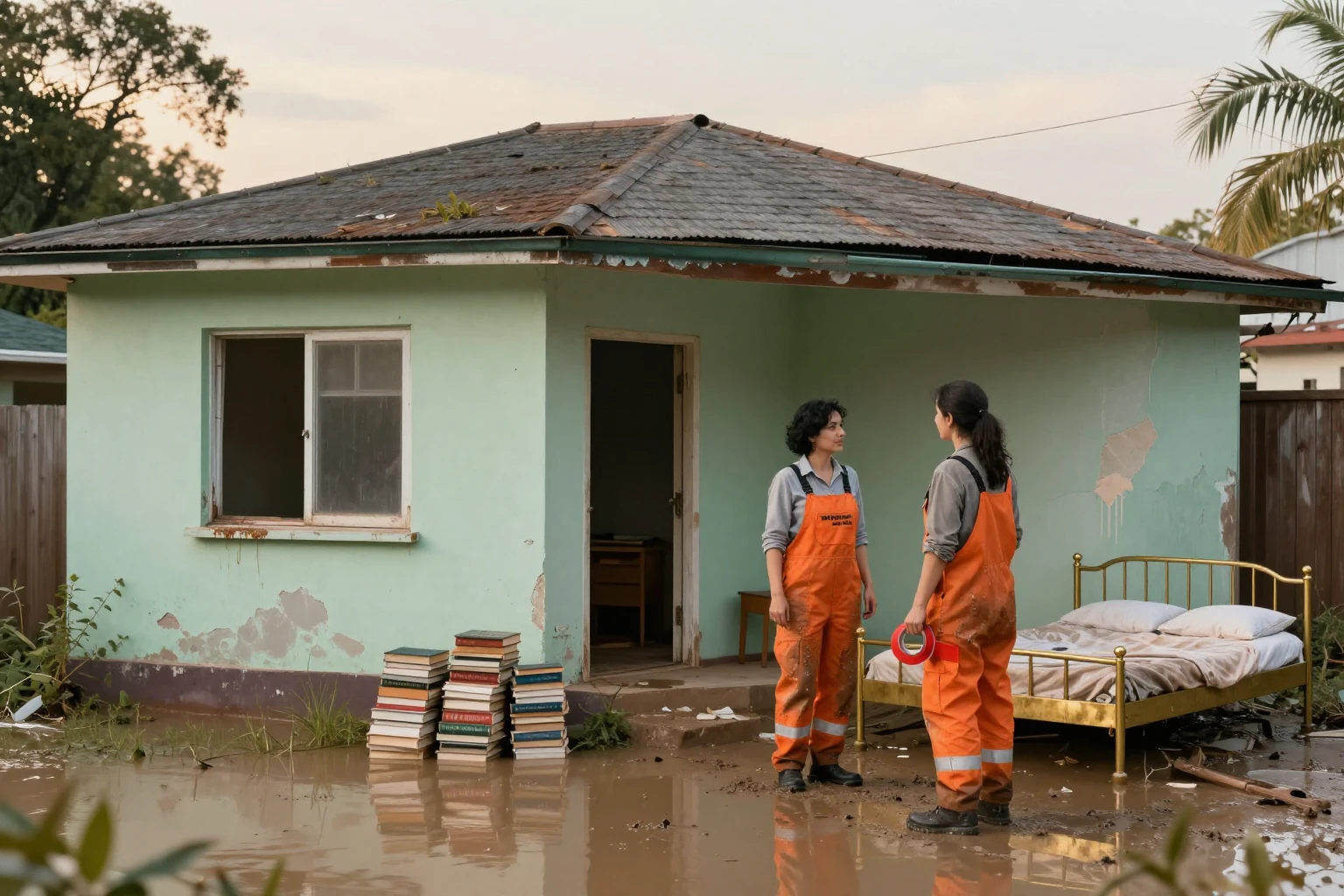
The water had reached seventeen inches inside the house. Inez knew because the mud had dried in a straight brown line across the pale green walls, through the calendar in the kitchen, across the door of the linen cupboard, and through the framed photograph of Mara at twenty-six holding a fish she had not caught.
The cleanup crew called these lines honest. Water recorded its highest point and withdrew. People argued with the mark afterward.
Inez parked the council truck beside a heap of mattresses. The whole street had begun to smell sweet, then sour, then chemical. Three streets over, a skip bin burned without flame, its wet plasterboard heating in the sun.
Mara was on the veranda in office clothes. Her grey blouse had dried salt around the armpits. She held a folder against her chest and watched Inez climb down from the cab.
“You cut your hair,” Mara said.
“Eight months ago.”
“It suits the work.”
“Everything suits orange overalls.”
Mara looked past her toward the two men in the truck. “I thought you were coming alone.”
“They are doing number forty-two. I borrowed the truck.”
“From the city?”
“From the ratepayers. You are one.”
“For another six days.”
The bank letter in her folder gave them until Friday to remove personal property. Demolition would begin Monday. Their mother had owed more on the section than either daughter knew, and the flood settlement had gone first to the mortgage. Celia had died in the evacuation centre on a camp bed under the basketball hoop, eighty-one years old and furious that nobody could find her lower dentures.
Inez pulled on gloves. “We take photographs before moving anything. White stickers for keep. Red tape for waste. Yellow for hazardous.”
“You have a color for every grief.”
“Only the ones the council pays for.”
Mara opened the door.
The carpet shifted under them like skin on soup.
The Inventory
They worked from the front room inward. The television had floated from its cabinet and settled face down beside the piano stool. Celia had kept the piano tuned after arthritis stopped her playing. Every key made the same wet wooden clack.
Mara photographed each room with her phone. She took straight, useful pictures, the kind an assessor could understand. Inez lifted, tested, and marked. They agreed on the sewing machine, the cast-iron pan, and the blue glass bowl from Celia’s mother. They disagreed about sixty-seven Reader’s Digest books swollen into blocks.
“She read them,” Mara said.
“Now fungus is reading them.”
“Can you leave one sentence alone?”
Inez set the last book onto the waste pile. “Can you make one decision before it becomes someone else’s job?”
The words landed cleanly. Mara turned away and photographed the ceiling.
They had used the same fight during the marriage, changing only the object. A leaking tap. Christmas with Celia. The paperwork for a second round of fertility treatment. Mara waited until decisions matured into emergencies. Inez moved early and called the damage efficiency.
At noon they ate meat pies on the veranda. Inez had brought two without asking which filling. Mara peeled away the soft pastry lid and fed pieces to a wet blackbird that had forgotten fear.
“You still at Southern Credit?” Inez asked.
“Collections quality.”
“Quality debt.”
“I listen to calls and tell people where they failed the script.”
“Do they fail often?”
“People say interesting things when you ask for money they do not have.”
Inez wiped gravy from her thumb. “You could leave.”
“You left enough for both of us.”
The blackbird took a strip of pastry and flew into the roofless house next door.
Under the Lino
The letters were beneath the kitchen lino, wrapped in a shopping bag and sealed with parcel tape. Inez found the raised corner with her shovel. Mara crouched beside her while she cut the plastic.
Most of the envelopes carried no stamp. Celia had written their names on them in the thick blue pen she used after her eyes clouded. Six for Mara. Four for Inez. One said BOTH GIRLS, as if they were still waiting for school shoes.
They moved the bundle into an enamel basin and carried it to the driest patch of floor.
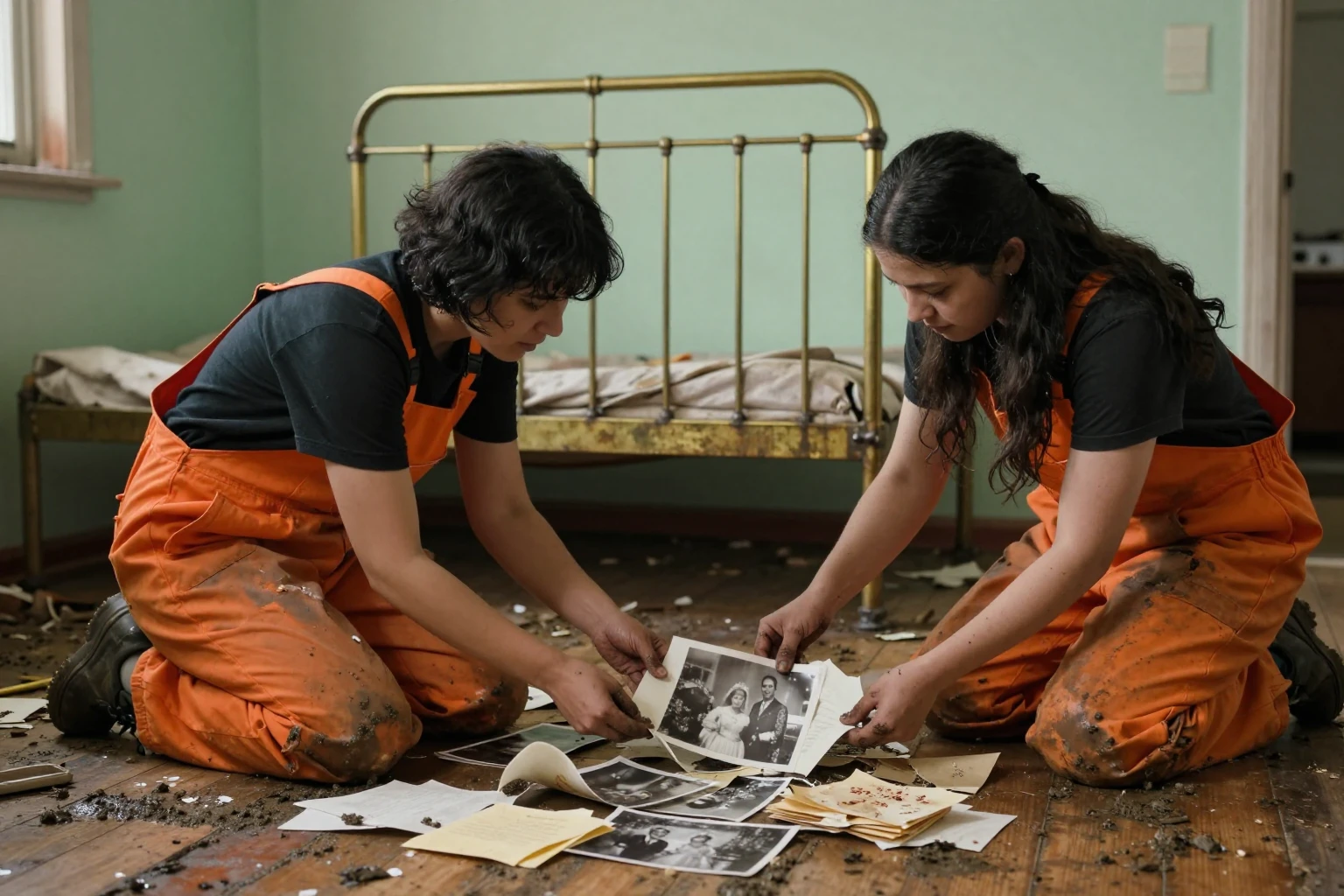
Mara opened hers first.
“June, six years ago,” she said. “That was before the operation.”
“Read it.”
“It is mine.”
“Then why tell me the date?”
Mara read silently. The pages adhered at the fold. When she separated them, a strip of inked paper stayed on her fingertip.
Inez chose the letter marked BOTH GIRLS. The first lines were shopping instructions. Celia wanted coffee, batteries, the ointment with the red lid. Halfway down the page, her handwriting narrowed.
If one of you comes, tell the other. I am tired of hearing two versions of the same silence.
Inez passed the page over.
“She made us responsible for her loneliness,” Mara said.
“She had practice.”
“You liked her.”
“Some weeks.”
“She liked you more.”
“She could be rude to me. That was her version of trust.”
Mara took the four envelopes with Inez’s name and placed them in the basin. “You should read those somewhere dry.”
“You should read yours out loud.”
“Why?”
“Because your face changed.”
“My face is forty-three.”
“I know your face.”
Mara looked at her then, directly and with old irritation. “She knew about Rina.”
Inez sat back on her heels.
Rina had been a junior assessor during the second flood warning, the year the river stopped six centimetres below the banks. Inez had slept with her twice in a motel where the towels smelled of vinegar. She confessed three months later. Mara asked careful questions, made dinner, and left the following morning.
“How?” Inez said.
“You used her name while you were asleep on the sofa. Mum was there.”
“She never said.”
“She wrote that I should forgive you before being alone became a habit.”
“Did it?”
Mara folded the letter along its ruined crease. “She wrote it six years ago.”
The Brass Bed
Rain started after four. It hit the exposed iron roof in isolated drops, then joined into one noise. They closed the windows although the glass had gone from two of them.
The brass bed in Celia’s room had belonged to her parents. The mattress was outside, heavy with river water. Inez loosened the frame with a spanner while Mara held the torch.
“There is room in my storage unit,” Mara said.
“For a bed you will never assemble.”
“I might.”
“You have a double already.”
“You remember my furniture?”
“You sent me the real-estate listing when you moved.”
“To show you the address.”
“The bed had a red cover.”
“It came with the room.”
The bolt released. The headboard tipped toward Mara, and Inez caught it against her shoulder. For a moment they stood close inside the oval of brass. Mara’s torch shone between their bodies.
“Put your hand higher,” Inez said.
“I remember.”
They carried the headboard through the hall, negotiating corners by instinct. Outside, the rain cooled the mud on their forearms.
A scrap dealer had offered thirty dollars for the frame. Mara refused. Inez did not argue. They strapped the pieces to the roof rack of Mara’s car, wrapped in an old blanket that smelled of the house before the river.
After the Mark
By Friday the rooms were empty enough for demolition. White stickers covered one side of the veranda. Red tape covered the other. The letters dried in open trays at Mara’s flat, each page weighted with a spoon.
At six in the morning, Inez arrived to return the truck. Mara was asleep in the passenger seat of her car. The brass rails ran above her like a narrow second roof.
Inez tapped the window.
Mara woke and lowered it. “I was waiting.”
“For what?”
“Help with the bed.”
“Now?”
“Before work.”
Inez looked at the house. In the clear early light, the silt line appeared almost decorative, a border painted through every room. On Monday an excavator would push the walls inward and the line would break into pieces too small to read.
“I have two hours,” she said.
Mara moved her handbag off the passenger seat.
“Follow me,” she said.
Inez climbed into the council truck. Mara started the car. They drove away from the river in separate vehicles, carrying the same bed.