Netwrck
Fiction.
Doors at Six
Paradise Bingo opened for its final night with two hundred and twelve chairs, three hundred cups, forty liters of tea, and no working letter P in the sign above the entrance.
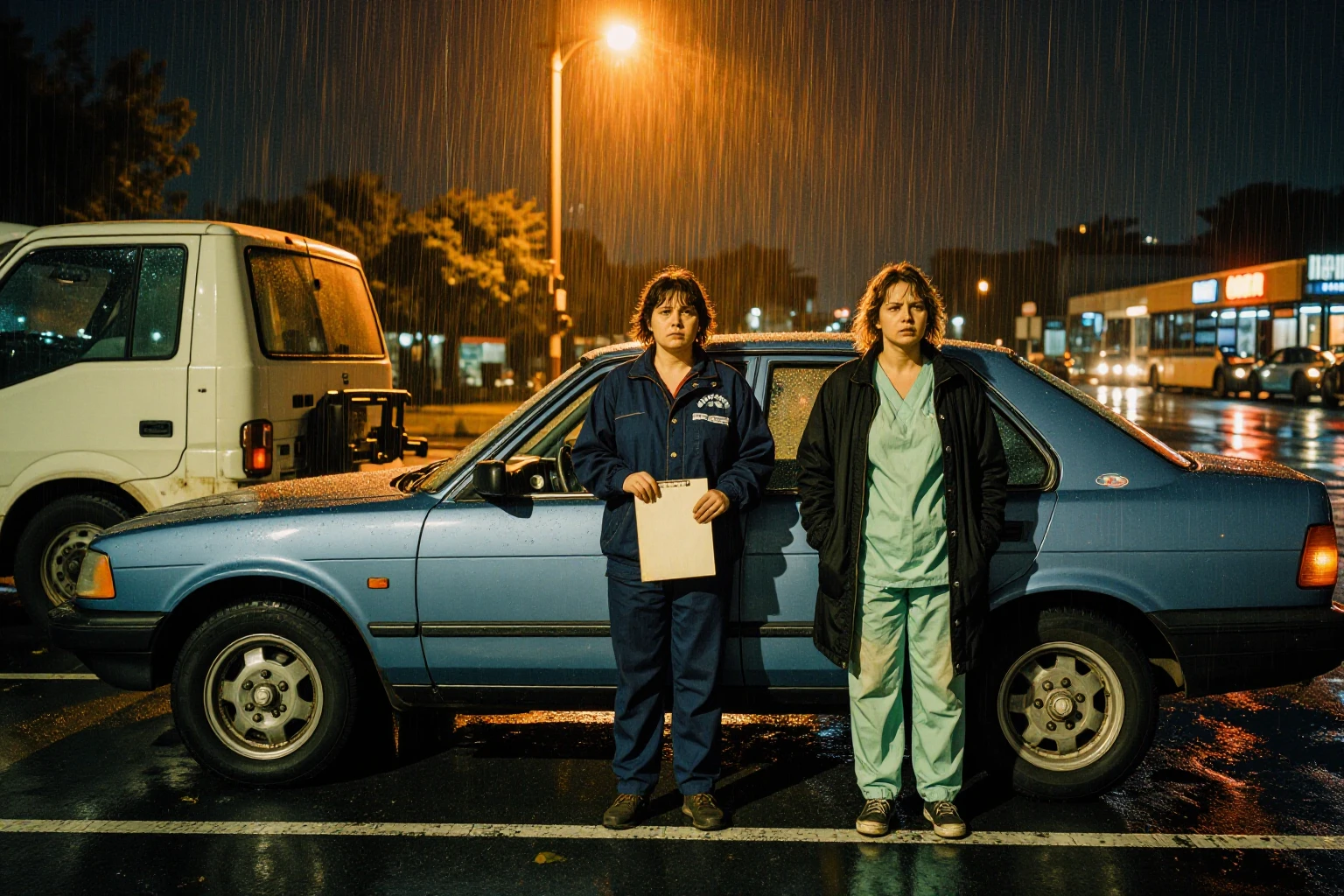
ARADISE glowed red in the rain.
Ruth Bell arrived at four to count the float. She had owned the hall for twenty-nine years and called numbers for thirty-four. Her voice could turn seventy-four into a threat and twenty-two into gossip. Regulars claimed they heard her in their sleep.
By five, the kitchen women were buttering bread. Doug polished the number machine with a yellow cloth. Ruth’s grandson Lee carried boxes toward the back office and asked the same question every ten minutes.
“This one?” he said, holding up a chipped ceramic swan.
“Bin.”
“Nan gave it to you.”
“Your nan gave me six. Bin.”
“What about the gold curtain?”
“Storage.”
“You do not have storage.”
“Then put it in your car.”
Lee looked toward the stage, where thirty meters of gold fabric sagged around the caller’s booth. “My car is a Honda Civic.”
“Drive with the windows down.”
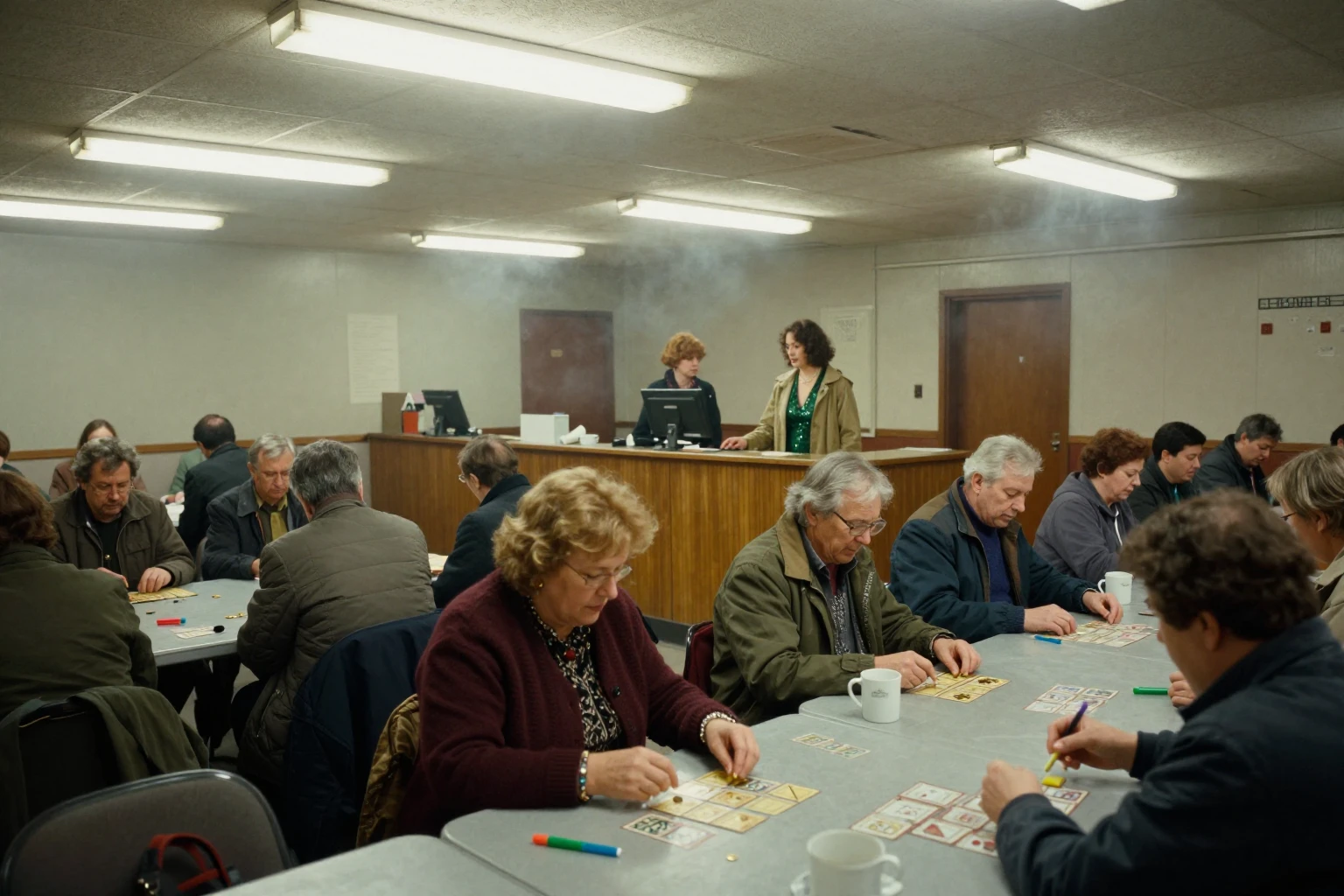
At six, people came in carrying rain on their coats. They queued down the block although every regular had an assigned table nobody else would take. Elsie Ford sat nearest the heater. Mr and Mrs Khan opened two packets of ginger biscuits. Danny Pike brought his own red marker because the hall markers made his fingers smell of pennies.
Ruth watched the room fill. She had sold the building to a pharmacy chain after the roof insurance rose beyond the monthly take. On Monday, contractors would measure the front for automatic doors. The pharmacy manager had offered Ruth a job greeting customers during the opening week.
She told him she would rather steal medicine.
At six twenty, Evelyn Cross walked through the door in a green sequined dress and a tan raincoat.
The queue opened around her.
Evelyn had left town in 1981 after a summer working the cash booth and a winter sleeping in Ruth’s spare room. She returned for funerals and once for a court case involving her brother. She never came to Paradise.
Ruth counted a stack of one-pound notes twice.
“Book of six?” she asked.
“I never manage six,” Evelyn said.
“Book of three.”
“Still optimistic.”
Ruth handed over the cards. Evelyn handed her a twenty.
“Price went up,” Ruth said.
“I heard.”
“Everything does.”
“Some things close.”
The women behind Evelyn shifted with professional interest. Ruth gave change and pointed toward table nineteen.
“You remembered,” Evelyn said.
Ruth looked at the next customer. “Nobody else will sit there.”
Eyes Down
The first game paid forty pounds for a line and one hundred for a full house. Ruth called from the stage.
“Five and nine, the Brighton line, fifty-nine.”
Markers clicked across paper.
“Two little ducks, twenty-two.”
Danny Pike made a quiet quacking sound. He had done it since 1976.
“Key of the door, twenty-one.”
From table nineteen, Evelyn said, “You used to give me one.”
Ruth kept her eyes on the ball. “And you lost it.”
Half the hall laughed. The other half turned to see who had spoken.
Evelyn wore the same color she had worn at the Christmas dance in 1980. The original dress was long gone. Ruth knew because she had watched Evelyn cut it into cleaning rags after Ruth announced her engagement to Bernard Bell.
Bernard was kind, solvent, and willing to live above a bingo hall. Ruth loved him for twenty-six years. He died slowly enough to make every parting feel rehearsed.
Evelyn moved to the coast, ran a funeral home with another woman, and sent Christmas cards containing no personal news. Ruth kept them in the kitchen drawer beneath the takeaway menus.
“House,” Elsie Ford called.
Doug stopped the machine. Lee checked her card.
“Good house,” he said.
Ruth paid Elsie in new notes. Everyone clapped except Evelyn, who examined her losing card as if it had breached a contract.
The Interval
At nine thirty, the kitchen sold the last ham sandwich. People walked the hall stretching stiff knees. Ruth stood in the back office beside boxes marked KEEP, SELL, and LEE.
Evelyn entered without knocking.
“That dress is cruel,” Ruth said.
“It cost nineteen pounds online.”
“That explains the fit.”
“You noticed.”
Ruth closed the cash tin. “Why are you here?”
“Last night.”
“You missed ten thousand others.”
“I worked some of them.”
“Fifty-eight.”
“You counted?”
“I paid you.”
Evelyn removed her raincoat and laid it across a box. The sequins threw green squares onto the office wall.
“I found Bernard’s letter,” she said.
Ruth sat down.
Bernard had written to Evelyn during the last month of his life. He told Ruth only after posting it and refused to say what he had written. At the time, Ruth was bathing him in a plastic chair and learning the brands of morphine that made him gentle.
“He apologized,” Evelyn said. “For asking me to leave.”
“He had no right.”
“It was his flat.”
“It was my spare room.”
“You married him.”
“He did not make me.”
“I know.”
That answer angered Ruth more than accusation could have.
“Did he ask you to come back?” she said.
“He asked me to forgive you.”
Ruth opened the cash tin again and counted notes she had already counted. “Men become generous with women’s lives when death is near.”
“He said you kept every card.”
“Get out of my office.”
Evelyn picked up her coat. “Call fifty-three in the last game.”
“If it comes out.”
“Make it come out.”
“You always thought I fixed the machine.”
“You fixed everything else.”
Last House
The final game began at eleven forty. The prize was one thousand pounds, more than the hall could afford and less than the regulars deserved.
Ruth called slowly. People marked cards with their coats on. Rain struck the high windows. Each number removed one possible future until the whole room leaned toward the stage.
Fifty-three came out ninth.
Ruth held the ball between finger and thumb.
“Stuck in the tree, fifty-three.”
At table nineteen, Evelyn placed her marker. She did not look up.
Mr Khan won after thirty-seven calls. He stood in shock while his wife hit his shoulder and shouted for him. Ruth counted the prize into his hands. He returned one note.
“For the roof,” he said.
“Roof belongs to the pharmacy Monday.”
“Then for you.”
Ruth put the note back in his palm. “Buy something scandalous.”
At midnight she thanked the kitchen, Doug, Lee, the women who sold books, and everyone who had come through the doors since 1959. She had written a speech on three cards. She used one sentence.
“You kept the lights on,” she said.
People folded chairs, stole ashtrays, and queued to kiss her. Elsie Ford cried into Ruth’s cardigan. Danny Pike carried his red marker home.
After Closing
Evelyn stayed until the doors were locked.
Lee drove away with the gold curtain bursting from both rear windows. Doug took the number machine. Ruth switched off the fluorescent lights row by row.
Under the final light, the strap on Evelyn’s green shoe snapped.
“Nineteen pounds,” Ruth said.
“You cursed it.”
Ruth found red electrical tape in the caller’s booth and knelt beside a chair. Evelyn rested one foot on the seat.
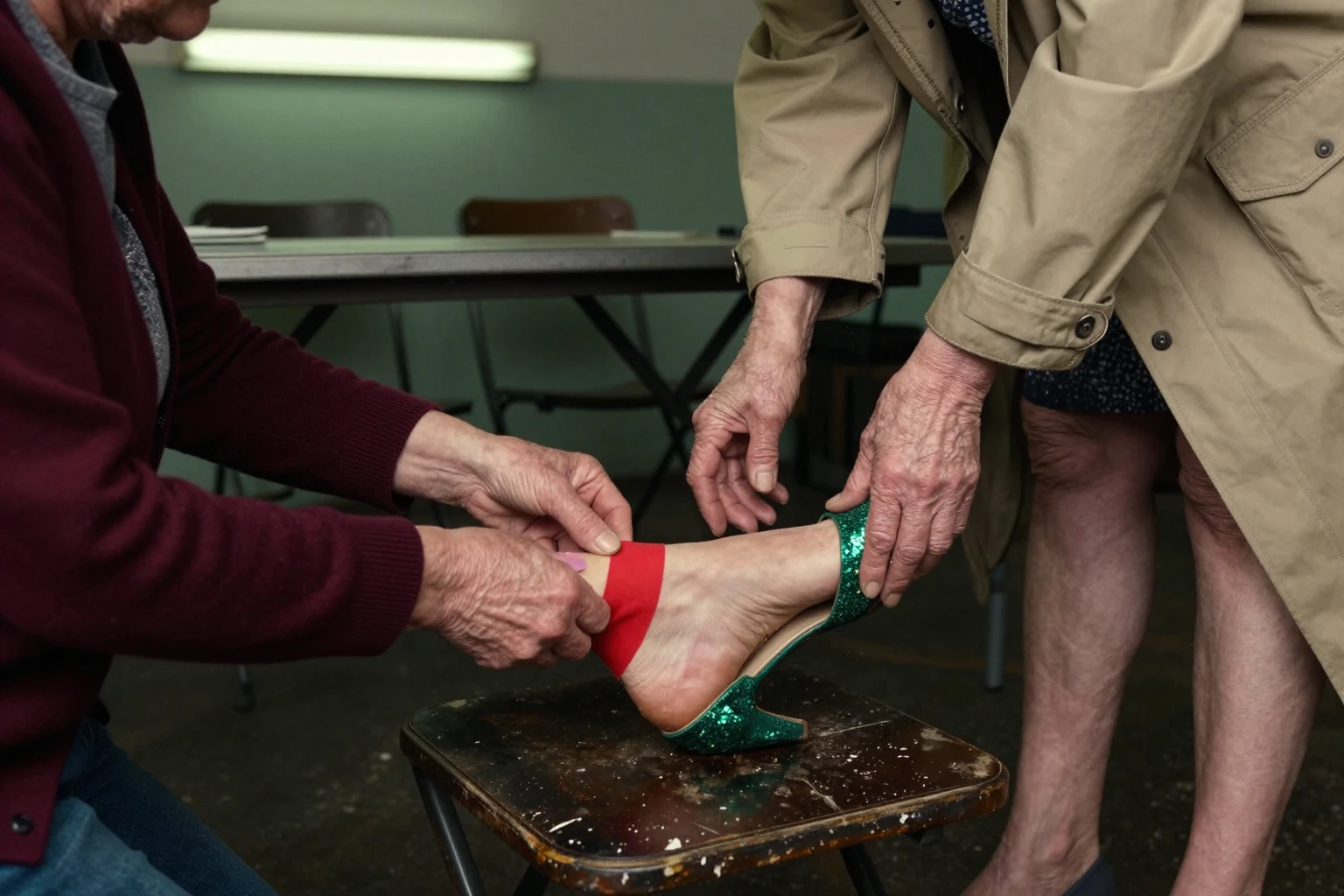
“You could stay at mine,” Ruth said while wrapping the strap. “The last train has gone.”
“There is a hotel by the station.”
“Full of damp.”
“Your spare room has rules.”
Ruth tore the tape with her teeth. “One rule. No green sequins in the washing machine.”
Evelyn put her foot down. The repair held.
They stood in the empty hall. Without people, Paradise looked smaller than either remembered. Rectangles of clean floor showed where tables had protected the carpet. The pharmacy contractors would see these pale shapes and think the room had always been arranged this way.
Ruth switched off the final light.
Outside, ARADISE went on glowing. Evelyn opened her raincoat above both their heads, too small to keep either woman dry. They walked toward Ruth’s car with the broken shoe ticking softly on the wet pavement.